Delivery quotes by ZIP code before you pay

+1 (626) 290-2366

info@levshippingcontainers.us

Monday to Friday, 9:00 AM to 5:00 PM ET

Category: Buying Guides

  • Wind & Watertight vs Cargo Worthy Containers: What Is the Difference?

    Wind & Watertight vs Cargo Worthy Containers: What Is the Difference?

    If you are shopping for a used shipping container, you will see two common condition grades: Wind & Watertight (WWT) and Cargo Worthy (CW). They sound similar, but they are suited to different uses. This guide explains what each grade means, how they compare, and which one you need.

    Quick answer

    • Choose Wind & Watertight for ground storage where the container will stay in one place.
    • Choose Cargo Worthy if the container needs to be structurally sound for shipping cargo, or you want a used unit in better structural condition.

    What does Wind & Watertight (WWT) mean?

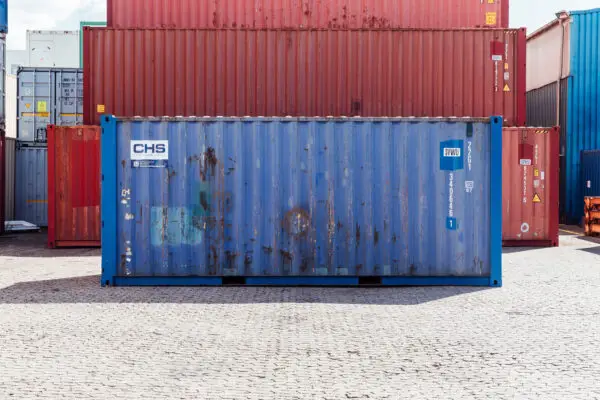
    A Wind & Watertight container is a used unit intended to keep out ordinary wind and water when placed on the ground. It is suited to storage. Expect cosmetic wear such as dents, surface rust and patched panels. A WWT container is not rated for shipping cargo overseas.

    What does Cargo Worthy (CW) mean?

    A Cargo Worthy container is a used unit that is structurally sound for shipping cargo. Cargo Worthy containers are also wind and watertight, but they meet a higher structural standard. We confirm a CSC plate or survey for each Cargo Worthy listing.

    Wind & Watertight vs Cargo Worthy compared

    Wind & Watertight (WWT)Cargo Worthy (CW)
    Keeps out wind and waterYesYes
    Rated for shipping cargoNoYes
    Typical useGround storageShipping cargo or storage
    Cosmetic wearDents, surface rust, patched panelsUsed wear, but structurally sound for cargo
    PriceLowerHigher

    Price comparison

    At the time of writing, prices on our store are:

    ContainerWind & WatertightCargo Worthy
    20ft used$1,650$1,950
    40ft used$2,050$2,450

    Prices exclude delivery and sales tax and can change with availability. Standard delivery is $350 per order to eligible addresses in our 28-state service area.

    Which grade do you need?

    • Storing tools, equipment, inventory or household items on your property: Wind & Watertight is usually enough.
    • Shipping goods, or needing a container that is structurally sound for transport: choose Cargo Worthy.
    • Planning a conversion where appearance matters: consider a new one-trip container instead.

    Inspect your container at delivery

    Whatever grade you choose, inspect the container when it arrives and photograph any visible damage or discrepancies. Contact us promptly at info@levshippingcontainers.us. See our Product Condition and Warranty Policy and Returns and Refund Policy for details.

    Shop Wind & Watertight containers or Cargo Worthy containers.

    Need help choosing?

    Tell us what you plan to store, your delivery ZIP code and any site access limits. We will confirm availability, the condition grade and your delivery quote before you pay anything.
  • New vs Used Shipping Containers: Which Should You Buy?

    New vs Used Shipping Containers: Which Should You Buy?

    New or used? It is one of the biggest choices when buying a shipping container, and it affects price, appearance and how long the container will look its best. This guide explains the difference between new (one-trip) and used shipping containers, compares prices, and helps you decide which is right for your project.

    Quick answer

    • Buy new (one-trip) if appearance matters, such as for a site office, retail space, workshop conversion or a container that will be visible from the street.
    • Buy used if you mainly need secure, affordable ground storage and do not mind cosmetic wear.
    • Check the condition grade on any used container: Cargo Worthy and Wind & Watertight units are suited to different uses.

    What is a new (one-trip) shipping container?

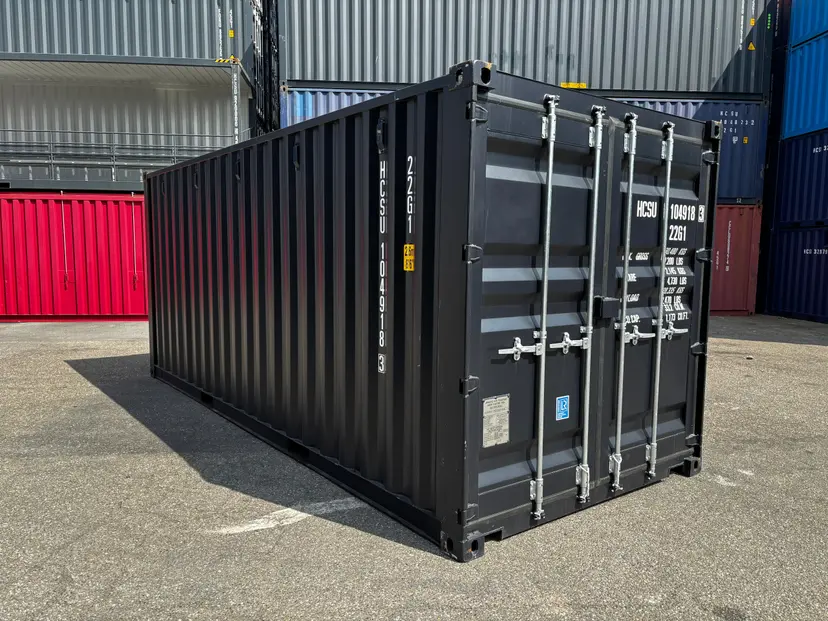
    A new shipping container is built new and typically shipped once with cargo before it is sold, which is why it is often called “one-trip”. Expect minimal wear, uniform paint and clean flooring. New containers are the best choice for site offices, retail, visible installations and conversions where a clean finish matters.

    What is a used shipping container?

    A used container has served in transport before sale. Used containers may show ordinary signs of prior use, including dents, scratches, surface rust, faded paint and possible repairs. They cost less than new units and are a practical choice for storage on farms, job sites, businesses and homes.

    Used containers are sold by condition grade:

    • Cargo Worthy (CW): structurally sound for shipping cargo.
    • Wind & Watertight (WWT): sealed against wind and water for ground storage, but not rated for shipping cargo. Expect dents, surface rust and patched panels.

    Read our guide to Wind & Watertight vs Cargo Worthy containers for more detail.

    New vs used shipping containers compared

    New (one-trip)Used
    AppearanceMinimal wear, uniform paintDents, scratches, surface rust and faded paint possible
    Best forOffices, retail, conversions, visible sitesStorage on farms, job sites, homes and businesses
    PriceHigherLower
    Condition gradesNewCargo Worthy or Wind & Watertight
    Warranty from LEV10-year limited structural warranty5-year limited structural warranty

    Price difference: what to expect

    At the time of writing, prices on our store for standard containers are:

    ContainerUsedNew
    20ft standardFrom $1,650 (Wind & Watertight)$4,000
    40ft standardFrom $2,050 (Wind & Watertight)$4,750

    Prices exclude delivery and sales tax and can change with availability. Standard delivery is $350 per order to eligible addresses in our 28-state service area.

    Warranty: new vs used

    We offer a 10-year limited structural warranty on new containers and a 5-year limited structural warranty on used containers, both from the delivery date. Cosmetic wear is not covered. See our Product Condition and Warranty Policy for full terms.

    How to decide

    • Will the container be seen by customers or neighbors? If yes, consider new.
    • Are you converting it into an office, workshop or living space? New is usually easier to work with.
    • Is it for basic storage on a budget? A used container is often the better value.
    • Do you need it for shipping cargo? Choose new or a Cargo Worthy used unit, not Wind & Watertight.

    Shop new shipping containers or used shipping containers.

    Need help choosing?

    Tell us what you plan to store, your delivery ZIP code and any site access limits. We will confirm availability, the condition grade and your delivery quote before you pay anything.

  • 20ft vs 40ft Shipping Container: Which Size Should You Buy?

    20ft vs 40ft Shipping Container: Which Size Should You Buy?

    Choosing between a 20ft and a 40ft shipping container is the first decision most buyers make, and it affects price, delivery access and how useful the unit will be on your site. This guide compares the two most popular shipping container sizes side by side, explains when a high cube is worth it, and covers what to check before delivery.

    Quick answer

    • Choose a 20ft container if space on your property is limited, you need storage for a home, farm or small business, or delivery access is tight.
    • Choose a 40ft container if you need roughly twice the floor space, are storing long items or equipment, or want the lowest cost per cubic foot.
    • Choose a high cube (in either length) if you plan to add shelving, store tall items or convert the container into a workshop or office.

    20ft vs 40ft shipping container dimensions

    Both sizes share the same 8ft width. The difference is length and, for high cube models, an extra foot of height. Figures below are typical for standard dry containers; exact dimensions vary slightly by manufacturer.

    20ft standard40ft standard
    Exterior (L × W × H)Approx. 20′ × 8′ × 8′6″Approx. 40′ × 8′ × 8′6″
    Interior (L × W × H)Approx. 19′4″ × 7′9″ × 7′10″Approx. 39′6″ × 7′9″ × 7′10″
    Floor area (interior)About 150 sq ftAbout 306 sq ft
    CapacityApprox. 1,170 cu ftApprox. 2,390 cu ft
    Empty (tare) weightAbout 4,630 to 5,070 lbAbout 7,940 to 8,600 lb

    A 40ft container gives you about twice the storage of a 20ft unit, but it is not twice the price. That is why larger projects often get better value from the longer size.

    Standard vs high cube: is the extra foot worth it?

    A high cube container is 9′6″ tall on the outside instead of 8′6″, which raises the interior height to about 8′10″. That extra foot adds about 12 percent more volume.

    Standard heightHigh cube
    Exterior height8′6″9′6″
    Interior heightAbout 7′10″About 8′10″
    20ft capacityApprox. 1,170 cu ftApprox. 1,310 cu ft
    40ft capacityApprox. 2,390 cu ftApprox. 2,690 cu ft

    A high cube makes sense for tall equipment, stacked pallets, racking, or any build where people will work inside. If you only need basic ground storage, a standard height container is usually enough. Browse our high cube containers.

    When a 20ft container is the better choice

    • Residential, garden and farm storage where space is limited
    • Tool and material storage on small job sites
    • Retail stock rooms and overflow storage
    • Sites with narrow driveways, gates or tight turns
    • Workshop or office conversions that do not need much floor space

    The 20ft size is the most versatile option for most customers. See our 20ft shipping containers.

    When a 40ft container is the better choice

    • Commercial and industrial storage
    • Construction sites that need to keep large amounts of material secure
    • Storing vehicles, machinery or long items
    • Warehousing and inventory overflow
    • Projects where cost per cubic foot matters more than footprint

    If you have the room and the delivery access, a 40ft unit usually gives the most storage for the money. See our 40ft shipping containers, or our 45ft high cube containers for even more length.

    New vs used: which condition do you need?

    Both sizes are available new or used. Here is how the main condition grades compare:

    • New (one-trip): built new and typically shipped once with cargo before sale. Minimal wear, uniform paint and clean flooring. Best for site offices, retail and visible installations.
    • Cargo Worthy (CW): a used container that is structurally sound for shipping cargo.
    • Wind & Watertight (WWT): a used container sealed against wind and water for ground storage. Expect dents, surface rust and patched panels. It is not rated for shipping cargo.

    Used containers cost less and work well for storage. Read more in our guides to new vs used shipping containers and Wind & Watertight vs Cargo Worthy, or our Product Condition and Warranty Policy, or shop new and used containers.

    Price: what to budget

    At the time of writing, prices on our store start at:

    ContainerStarting price
    20ft used (Wind & Watertight)$1,650
    40ft used (Wind & Watertight)$2,050
    20ft new high cube$3,400
    40ft new standard$4,750

    Prices exclude delivery and sales tax and can change with availability. Standard delivery is $350 per order to eligible addresses in our 28-state service area. Check current prices in the shop.

    Delivery and site preparation

    Shipping containers are usually delivered on a tilt-bed truck that slides the container off at your site, so access matters as much as size. A 40ft delivery needs noticeably more straight, open space for the truck to pull forward than a 20ft delivery. Before you order, check that:

    • The drop spot is firm, level and well drained (gravel, concrete or solid blocks work better than soft grass)
    • The approach is wide enough for the truck, with no tight turns, low branches or overhead wires
    • There is enough clear length in front of the drop spot for the truck to pull away as the container slides off
    • Any local permits or HOA rules for placing a container have been checked

    We confirm delivery availability and site requirements with your quote. Read our Shipping and Delivery Policy for full details.

    Still not sure which size to choose?

    Tell us what you plan to store, your delivery ZIP code and any access limits, and we will help you pick the right container before you pay anything.